 English
 عربى

Hairdressing Foil Corrosion Resistance: Preventing Hydrogen Peroxide Reactions
Content
- 1 The Chemistry Behind Hydrogen Peroxide and Aluminum
- 2 Why Aluminum Remains the Standard for Hair Foils
- 3 What Makes a Hairdressing Foil Chemically Corrosion-Resistant?
- 4 Preventing Foil Reactions with Hydrogen Peroxide: Salon Best Practices
- 5 Selecting Chemically Safe Hairdressing Foils
- 6 Frequently Asked Questions
Hairdressing foil looks like the most passive tool in a colorist's kit. Yet inside every foil wrap sits hydrogen peroxide, an aggressive oxidizer that decomposes throughout the processing time. When that peroxide encounters vulnerable aluminum, the result is a localized chemical reaction producing heat, gas, and discoloration — the failure salons describe when foils smoke or overheat. Understanding corrosion resistance in hair foils is therefore a safety issue, not merely a materials detail.
The Chemistry Behind Hydrogen Peroxide and Aluminum
Hydrogen peroxide (H2O2) is inherently unstable, decomposing into water and oxygen with heat release: 2H2O2 → 2H2O + O2. Hair lighteners intensify this by raising pH to roughly 9–10, so the inside of a highlight wrap is a moist, alkaline, oxidizing environment that persists for 30–60 minutes.
Aluminum survives because every fresh surface instantly forms a dense aluminum oxide film (Al2O3) about 2–4 nanometers thick. This passivation layer is the real barrier between peroxide and reactive metal. When that layer is breached through scratches, sharp folds, pinholes, impurities, or excess heat, peroxide oxidizes the exposed aluminum, consuming peroxide and releasing oxygen gas and heat. The heat accelerates further decomposition, producing a self-accelerating cycle that can make a damaged foil smoke within minutes. Compatibility charts rate pure aluminum as suitable for peroxide at ambient temperature, but warn that corrosion becomes significant above 40°C and with prolonged exposure.
Why Aluminum Remains the Standard for Hair Foils
If aluminum can react, why is it still the standard? Because in salon conditions — 10–40 volume developers, contact times under one hour, temperatures just above body heat — a correctly manufactured foil sits safely inside the material's compatibility window. No alternative offers the same combination: aluminum is malleable, conducts heat well, and its oxide film is insoluble in lightener, keeping reaction products out of the mixture. It is also inexpensive and recyclable, which is why it dominates professional coloring worldwide.
The common warning against "metal tools" with bleach confuses many. Steel scissors, clips, and bowls contain reactive iron alloys that can contaminate lightener, but aluminum foil carries a stable oxide layer that changes its electrochemical behavior. Purpose-made hair foil is therefore not a metal-tool hazard; it is precisely the passive, isolating material a lightening service requires.
What Makes a Hairdressing Foil Chemically Corrosion-Resistant?
Not every silver reel performs equally. Corrosion resistance in a hairdressing foil is engineered through five variables:
- Alloy purity. High-purity alloys (1100, 1235 series, 99%+ aluminum) avoid iron and copper impurities that create pitting sites.
- Oxide layer quality. Controlled production and annealing produce a denser Al2O3 film that resists peroxide longer.
- Thickness and gauge. Heavier foil (14–20+ microns) resists tearing, survives wrapping stress, and delays peroxide from reaching base metal.
- Surface profile. Smooth surfaces minimize reactive area; embossed or textured foil creates crevices for corrosion.
- Defect control. Low pinhole density and clean edges remove the weak points where peroxide attack begins.
The practical difference is summarized below.
| Property | Commodity Kitchen Foil | Corrosion-Resistant Hair Foil |
|---|---|---|
| Aluminum purity | 97–98%, variable | 99%+ high-purity alloy |
| Thickness | 10–12 microns | 14–20+ microns |
| Pinhole control | Higher density | Low, tightly controlled |
| Surface quality | Irregular texture | Smooth and uniform |
| Oxide integrity | Thin, easily damaged | Dense and continuous |
These parameters are set by the producer. A salon-grade line can be distinguished from a commodity kitchen reel almost entirely by manufacturing discipline.
Preventing Foil Reactions with Hydrogen Peroxide: Salon Best Practices
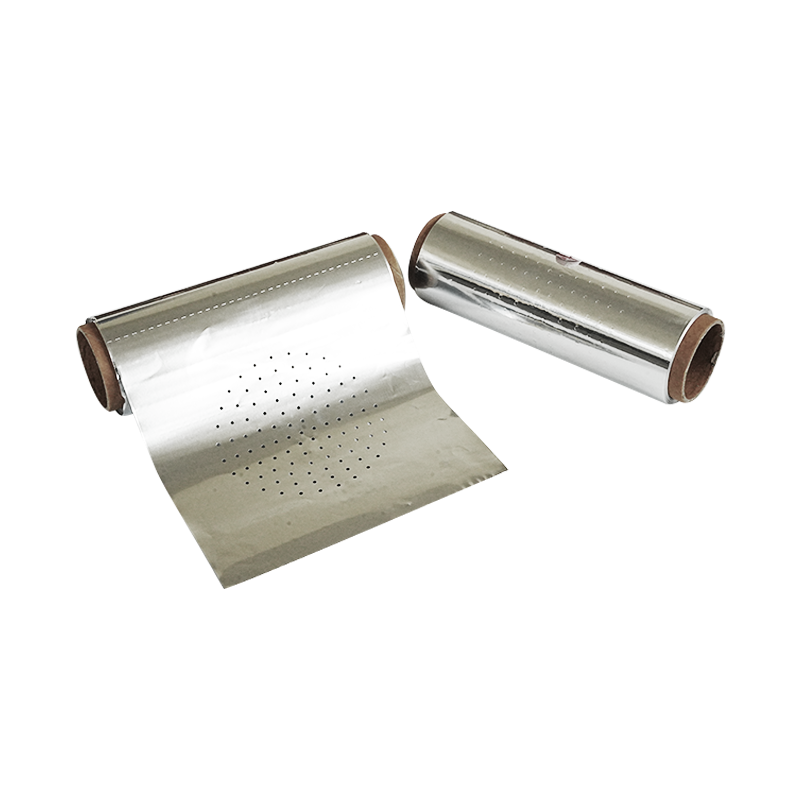
The first line of defense is the foil itself. Professional hairdressing foil rolls are manufactured with the alloy, gauge, and oxide quality required for chemical service.
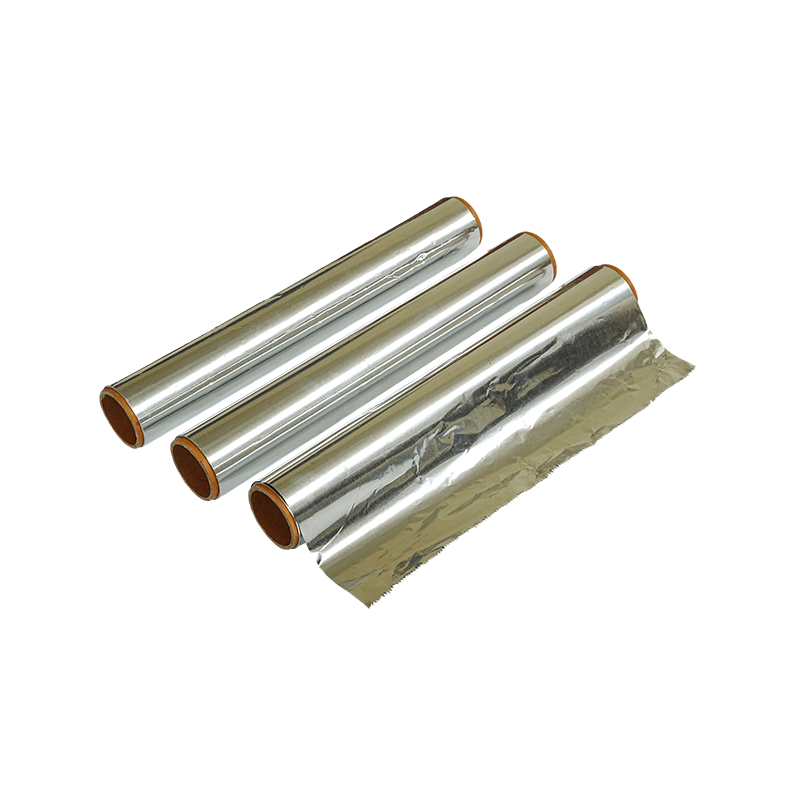
 Professional Hairdressing Aluminum Foil Rolls for SalonsThese rolls are made from high-quality, heat-resistant aluminum with a smooth, tear-resistant surface. They provide uniform heat conduction for precise sectioning and even color application during chemical treatments.View Product →
Around that foundation, handling determines whether the foil stays safe:
- Use salon-grade foil; kitchen foil is not designed for peroxide chemistry.
- Handle gently; the oxide film is nanometers thick and cracks under crushing or sharp folds.
- Never reuse foil; micro-scratches and peroxide residue from the first service weaken the next wrap.
- Use the lowest effective developer volume; 10 or 20 volume stresses the foil far less than 40 volume.
- Control heat; hot dryers accelerate corrosion dramatically and turn mild oxidation into overheating.
- Keep other metals away; clips or rings touching wet foil create galvanic corrosion.
- Watch the signs; heat, a sharp odor, darkening, or brittle foil means unwrap and rinse immediately.
Even the best foil can be made reactive by misuse, but the right foil gives the colorist a generous margin of safety.
Selecting Chemically Safe Hairdressing Foils
When sourcing hair foil for a salon, distribution channel, or private label, evaluate metallurgy and process discipline. A manufacturer whose history centers on aluminum foil development, such as Haining Xianju Industry and Trade, applies consistent production control from casting to finished roll. Reviewing an aluminum foil manufacturer's production approach is the first signal of whether a foil will perform safely with peroxide chemistry.
Ask for the alloy grade, guaranteed aluminum content, oxide-layer specifications, pinhole limits, and whether the supplier operates its own aluminum foil production base. A manufacturer that controls rolling speed, annealing, and surface finish can answer with numbers; a repackager cannot.
Format is the second decision. Rolls suit high-use stations; precut interfolded sheets speed up repeated highlighting and reduce waste. Both can carry the same corrosion-resistant standard when produced to specification.
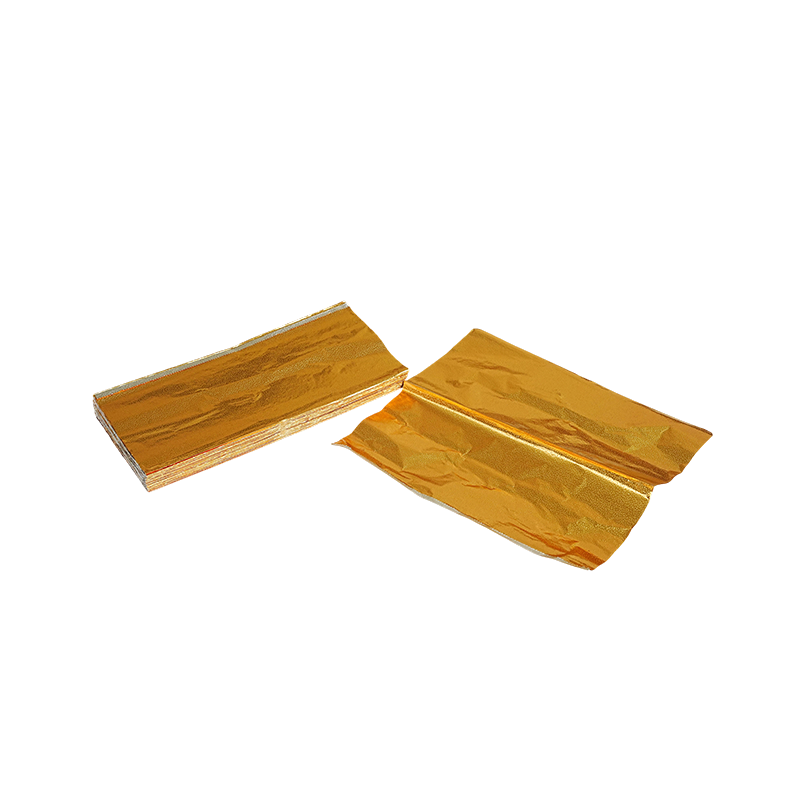 Pre-cut Interfolded Aluminum Foil Sheets for HighlightingThese lightweight, flexible sheets are pre-cut and interfolded for quick, waste-reducing use in repeated highlighting. With heat and moisture resistance, they offer a practical barrier for salon color services.View Product →
The underlying principle remains the same: the foil's job is to be chemically invisible. If it reacts with hydrogen peroxide, it steals heat, oxygen, and predictability from the service. Choosing foil that is made and tested for chemical resistance is not a luxury; it is how the chemistry stays where it belongs — in the hair, not on the metal.
Frequently Asked Questions
Q1: What causes hair color foils to smoke or become very hot?
Smoke and heat indicate an exothermic reaction between peroxide and exposed aluminum. Scratches, folds, reuse, thin gauge, or impure alloy compromise the oxide layer, allowing concentrated peroxide to oxidize the metal. Unwrap the foil, rinse the hair, and check the scalp.
Q2: Is it safe to use aluminum hair foil with all peroxide developers?
Yes, purpose-manufactured hair foil is designed for 10–40 volume developers within normal 30–60 minute service windows. Risk rises when heat is added, timing is extended, or the foil is not intended for chemical service.
Q3: Can kitchen foil replace salon hairdressing foil?
Kitchen foil wraps hair but is thinner, has a weaker oxide layer, and higher pinhole density. Under heat it is measurably more likely to react with peroxide, and the saving per wrap is not worth the risk of scalp irritation or service failure.
Q4: What warning signs should a colorist watch for?
Localized heat, a sharp acidic odor, gray-black discoloration, tiny surface bubbles, and foil that turns stiff all mean corrosion is underway. Remove the foil promptly, rinse the strand, and document the incident.

READY TO CUSTOMIZE YOUR FOIL? CONTACT US TODAY!
+86-13484112116
+86-13967339826
No. 22, Zhijiang Road, Zhouwangmiao Town, Haining City, Jiaxing City, Zhejiang Province, China
Contact Us
