 English
 عربى
عربى

How Safe Is Aluminium Foil In Oven Baking, and Where Do the Real Temperature Limits Sit?
Content
- 1 What Actually Happens When Aluminium Foil Meets Oven Heat
- 2 Temperature Thresholds Across Common Foil Grades
- 3 Comparing Foil Grades Across Key Performance Traits
- 4 How Baking Duration Affects Structural Integrity
- 5 Common Mistakes That Undermine Foil Performance
- 6 A Practical Workflow for Safe High-Heat Foil Use
- 7 Choosing Between Household, Private Label, and Catering Foil
- 8 Frequently Asked Questions
- 8.0.1 Q1: Can you use foil in the oven at every temperature setting?
- 8.0.2 Q2: Is it safe to use aluminum foil in the oven for acidic dishes?
- 8.0.3 Q3: What is the proper way to bake with foil near a broiler element?
- 8.0.4 Q4: Does foil thickness change how it behaves at high heat?
- 8.0.5 Q5: Can foil be reused safely after one baking cycle?
What Actually Happens When Aluminium Foil Meets Oven Heat
Kitchens and commercial bakeries rely on foil daily, yet many cooks still ask whether aluminium foil in oven safe conditions actually hold up under real baking temperatures. The short answer is that standard household and food-service foil is engineered to tolerate typical residential and commercial oven ranges, but performance changes depending on thickness, alloy composition, and how the sheet is positioned relative to heating elements.
Aluminium foil is produced from rolled aluminium alloy, most commonly in the 1235 or 8079 series, then annealed to reduce brittleness. This annealing step is what allows foil to fold around food without cracking while still holding shape at elevated temperatures. Ovens rarely exceed 260 degrees Celsius during normal home baking, and most foil grades comfortably handle that range without warping, discoloring, or releasing particles into food.
Where problems occur is not from the metal itself but from contact behavior. Foil placed directly against a heating coil, broiler element, or open flame can scorch, thin out, or in rare cases ignite trapped grease. Understanding this distinction between ambient oven heat and direct element contact is the foundation for safe usage across home kitchens, catering operations, and bakery production lines.
Temperature Thresholds Across Common Foil Grades
Not every foil roll is built for the same duty cycle. Household wrap, catering sheets, and heavy-duty variants differ in gauge and alloy hardness, which shifts their practical ceiling before structural stress becomes visible. The chart below summarizes commonly cited maximum recommended oven temperatures across foil categories used in residential and food-service settings.
These figures represent general operating guidance rather than a strict failure point. Aluminium itself has a melting point far above any home oven, so the numbers above reflect the temperature at which discoloration, minor warping, or handling difficulty may begin, not the point of structural failure.
Comparing Foil Grades Across Key Performance Traits
Temperature tolerance is only one variable. Kitchens choosing between standard and heavy-duty rolls also weigh tear resistance, moisture barrier quality, food safety compliance, and cost efficiency. The radar comparison below illustrates how these two common categories differ across five practical dimensions on a relative ten-point scale.
Heavy-duty foil trades some cost efficiency for stronger tear resistance and slightly higher heat tolerance, which is why it appears frequently in roasting and grill-adjacent applications. Standard foil remains the practical default for everyday oven baking, offering balanced performance without the added material cost.
How Baking Duration Affects Structural Integrity
Time under heat matters as much as peak temperature. Foil exposed to sustained high heat over long roasting cycles can gradually lose surface rigidity even if the temperature itself stays within the rated range. The line chart below tracks approximate structural integrity over a two-hour bake at two common oven settings.
At moderate oven settings, foil retains most of its rigidity even after two hours. At the higher setting, the decline is steeper, particularly past the ninety-minute mark, which is a useful reference point for long slow-roast recipes or catering batch cooking where foil covers a tray for extended periods.
Common Mistakes That Undermine Foil Performance
Most foil-related issues in home and commercial kitchens trace back to a handful of repeated habits rather than product defects. Recognizing these patterns helps preserve both food quality and oven condition.
- Placing foil directly on an oven floor or heating element instead of on a tray or rack, which concentrates heat unevenly.
- Wrapping acidic foods such as tomato-based dishes or citrus marinades tightly in foil for long durations, which can accelerate surface pitting.
- Using foil to line the base of a broiler pan, where reflected radiant heat runs significantly hotter than the surrounding air temperature.
- Reusing foil that has already thinned or torn from a prior bake, reducing its ability to hold shape under renewed heat exposure.
- Sealing foil too tightly around foods that release steam, which can trap pressure and distort the wrap during baking.
Avoiding these habits extends the practical life of a single sheet and reduces the chance of foil fragments transferring into finished dishes, which matters particularly in high-volume catering environments.
A Practical Workflow for Safe High-Heat Foil Use
Consistent results come from a repeatable process rather than guesswork. The flow below outlines a straightforward sequence that professional kitchens and careful home cooks can apply before every foil-involved bake.
Following this order reduces the chance of skipping a step during busy production runs. Bakeries producing high volumes of covered trays often standardize this exact sequence into a checklist posted near the oven line.
Choosing Between Household, Private Label, and Catering Foil
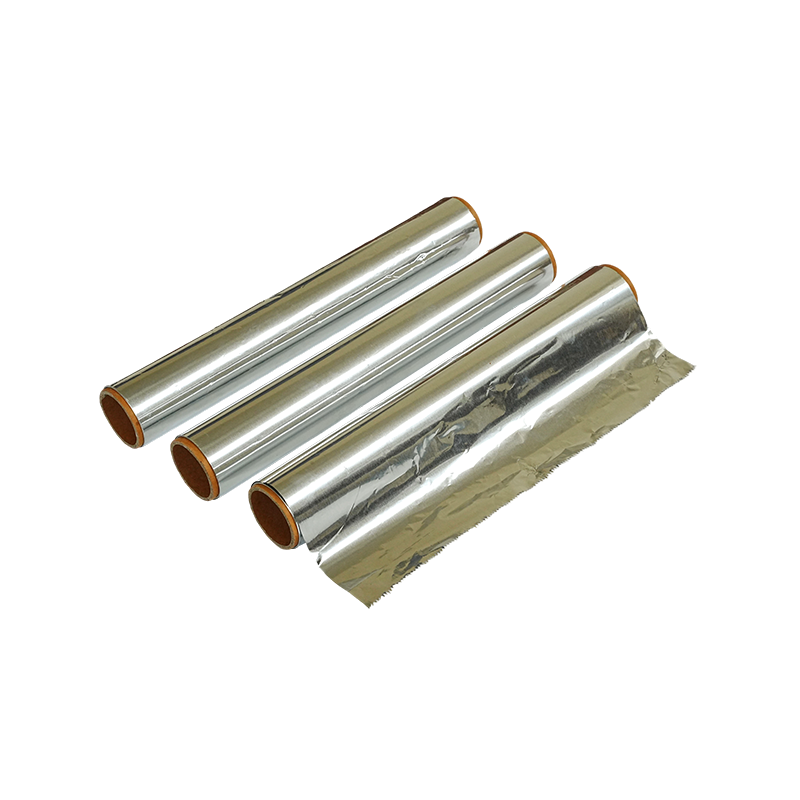
Sourcing decisions differ depending on scale and application. A home kitchen typically buys a single household roll, while a bakery or food-service operator often needs to compare gauge thickness, roll width, and packaging format across a supplier catalog. Businesses building their own retail line frequently look at private label oven safe baking foil as a way to control both branding and specification consistency across production batches.
Thicker gauges hold shape better under repeated tray handling, which is a common requirement for catering foil sheets used across banquet and buffet service lines. Table 1 summarizes practical selection guidance across the three primary buyer categories.
| Category | Typical Thickness | Best Fit |
|---|---|---|
| Household Roll | 10 to 14 microns | Everyday home baking and covering |
| Catering Sheets | 15 to 20 microns | Buffet trays, banquet service, repeated handling |
| Private Label Baking Foil | 18 to 24 microns | Branded retail packaging, bakery lines |
| Heavy Duty Roll | 25 to 30 microns | Roasting, grilling, long slow-cook cycles |
A properly rated foil sheet, kept off direct heating elements and matched to the correct gauge for the job, will outperform an oversized or undersized substitute even at identical oven temperatures.
Frequently Asked Questions
Q1: Can you use foil in the oven at every temperature setting?
Most household and food-service foil grades handle standard oven ranges up to roughly 260 degrees Celsius without structural failure, though performance near the upper end depends on gauge and exposure duration.
Q2: Is it safe to use aluminum foil in the oven for acidic dishes?
Short exposure is generally fine, but prolonged contact between foil and highly acidic ingredients over long bakes can cause surface pitting, so shorter cook times or a barrier layer are recommended.
Q3: What is the proper way to bake with foil near a broiler element?
Keep foil on a tray or rack positioned below the broiler element rather than touching it directly, since radiant heat close to the coil runs far hotter than general oven air temperature.
Q4: Does foil thickness change how it behaves at high heat?
Yes, thicker gauge foil resists warping and tearing better under sustained heat, which is why heavier rolls are typically chosen for extended roasting rather than quick covering tasks.
Q5: Can foil be reused safely after one baking cycle?
Foil that remains intact and unthinned can often be reused for a second lower-heat task, but any torn, thinned, or heavily discolored sheet should be replaced before further oven use.
READY TO CUSTOMIZE YOUR FOIL? CONTACT US TODAY!
+86-13484112116
+86-13967339826
No. 22, Zhijiang Road, Zhouwangmiao Town, Haining City, Jiaxing City, Zhejiang Province, China
Contact Us
