 English
 عربى
عربى

How Is Aluminium Foil Made? The Complete Step-by-Step Manufacturing Guide
Content
- 1 How Is Aluminium Foil Made: Raw Materials and Alloy Choices
- 2 Which Aluminium Alloys Do Foil Makers Prefer?
- 3 How Is Aluminium Foil Made: The 6-Step Process
- 4 What Separates Household Foil from Industrial Foil?
- 5 How Foil Quality Is Measured on a Real Production Line
- 6 Why Xianju's Foil Production Is Built for Export Buyers
- 7 FAQ: Aluminium Foil Manufacturing
You tear a sheet of kitchen foil from the roll, and it measures roughly 40 to 80 microns thick, thinner than a sheet of printer paper. But before it reached your kitchen, that roll travelled a long route from a several-tonne aluminium ingot to a high-speed foil rolling mill. Making aluminium foil is not simple pressing. It is an industrial system shaped by metallurgy, mechanical engineering and statistical process control. In this article, we answer how is aluminium foil made, from raw materials and alloy systems to the six core process steps and the real quality control methods behind it.
How Is Aluminium Foil Made: Raw Materials and Alloy Choices
Aluminium foil starts with aluminium ingot at 99.0% purity or higher, but the alloy composition, melting temperature control and casting method determine the real performance.
Industrial foil begins as electrolytic aluminium, cast into coil or slab through continuous casting and rolling. Global foil production exceeds 7 million tonnes per year, and the majority of ingots used have a purity between 99.0% and 99.7%. Within this range, trace elements such as iron, silicon and copper represent less than 1% of the total mass, yet they already affect strength, ductility and oxide film quality.
Buyers increasingly audit this stage too, because ingot chemistry affects downstream gauge stability. A foil mill that accepts low-quality scrap can end up with inconsistent annealing response and higher pinhole counts.
Definition: Aluminium foil is a thin metal sheet produced from aluminium ingots through continuous casting, hot rolling, cold rolling and foil rolling. Its thickness generally falls between 0.006mm and 0.2mm, and it is used in food packaging, hookah accessories, hairdressing and industrial insulation.
Which Aluminium Alloys Do Foil Makers Prefer?
Different foil applications call for different alloy families: household food foil mostly uses pure aluminium systems, while hookah foil and container foil lean towards 8011 or 3003.
Common foil alloys include 1050, 3003, 8011 and 8006. Their differences concentrate on iron, silicon and manganese content. Subtle shifts in these trace elements show up directly in tensile strength, elongation and corrosion resistance.
| Alloy | Main elements | Typical use | Tensile strength |
|---|---|---|---|
| 1050 | Al 99.5% or more | Food packaging foil | 70-110 MPa |
| 3003 | Mn 1.0-1.5% | Containers, cookware | 110-150 MPa |
| 8011 | Fe 0.6-1.0%, Si 0.5-0.9% | Hookah foil, closures | 120-160 MPa |
Tensile strength of common foil alloys (MPa)
Typical ranges published in common alloy specifications
Among all grades, 8011 is the most common system for hookah aluminium foil. It combines high strength, good corrosion resistance and compatibility with printing inks, making it suitable for embossed and colour-printed hookah foil.
How Is Aluminium Foil Made: The 6-Step Process
From ingot to finished foil, the route passes through melting and casting, hot rolling, cold rolling, foil rolling, slitting and annealing, with thickness dropping from about 6mm to 0.006mm.
- Melting and Continuous Casting
Aluminium ingots melt at 750-780 degrees Celsius, get degassed and filtered, then enter continuous casting to form 6-8mm gauge coil. This stage determines grain size and pinhole baseline. - Hot Rolling
The coil is reheated to 480-550 degrees Celsius and passes through a hot rolling mill, reducing thickness from 6-8mm to roughly 3-5mm. Grains refine and the structure homogenizes for later cold rolling. - Cold Rolling
At room temperature, with cooling lubricant applied, multiple cold passes reduce the strip from 3-5mm down to about 0.5-1.0mm. When work hardening occurs, an intermediate anneal restores ductility. - Foil Rolling
This is the most critical stage. Final gauge ranges from 0.006 to 0.05mm. The final passes use pack rolling, where two layers overlap and run through the mill together, producing ultra-thin gauge. Rolling speed reaches 1200-2000 m/min. - Slitting and Finishing
Slitters cut the wide foil to required widths while controlling winding tension and edge quality. Precut products undergo transverse cutting or punching in this stage, becoming sheets or discs. - Annealing and Coating
Annealing between 350-500 degrees Celsius, combined with controlled time, produces soft (O temper) or half-hard (H2 temper) foil. Printed or embossed products run through printing and embossing lines after annealing.
Raw materials account for more than 60% of total foil production cost, so alloy selection and rolling efficiency directly determine price competitiveness. This is why foil mills run multiple passes to reduce processing cost per tonne.
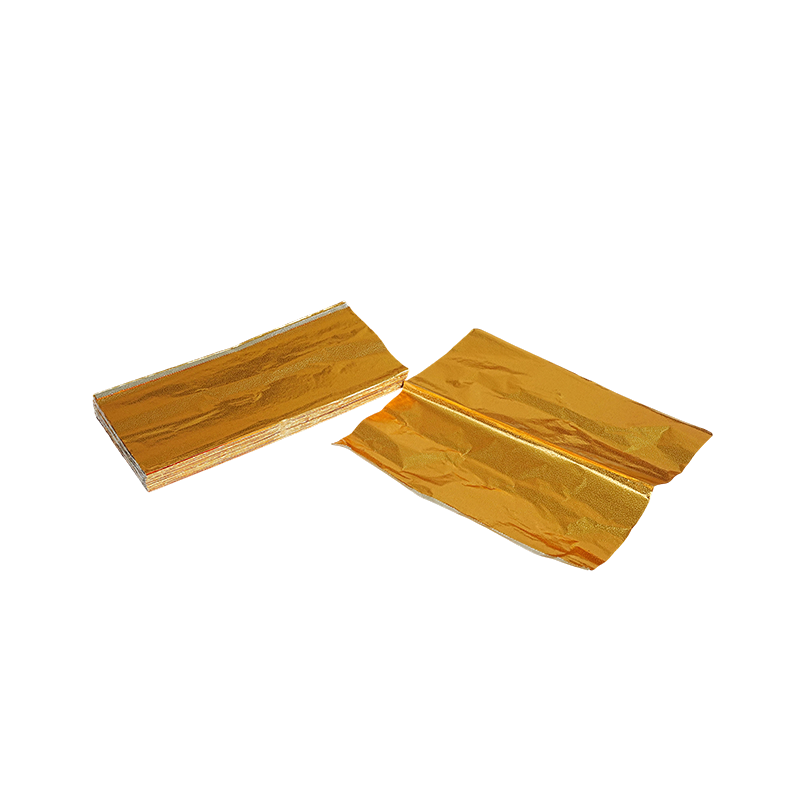
After foil rolling, products follow different routes. Punch-type products require uniform hole size and edge quality, such as precut hookah foil discs.
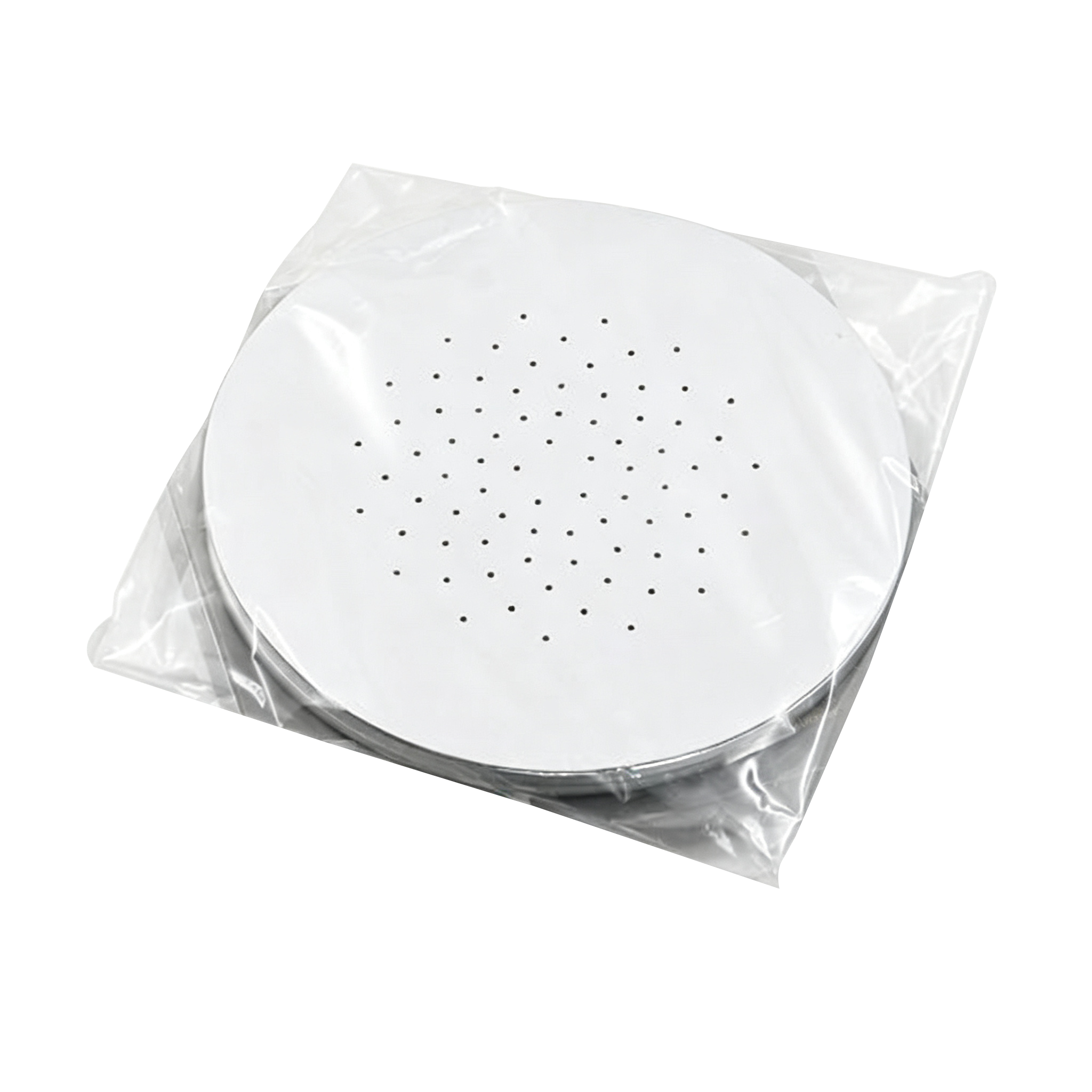 Pre-Cut Shisha Foil Discs for Standard Hookah BowlsThese pre-cut aluminum discs fit standard shisha bowls, eliminating manual cutting. They provide uniform thickness for even heat distribution and are made of food-grade foil, ensuring a clean, controlled smoking experience.View Product →
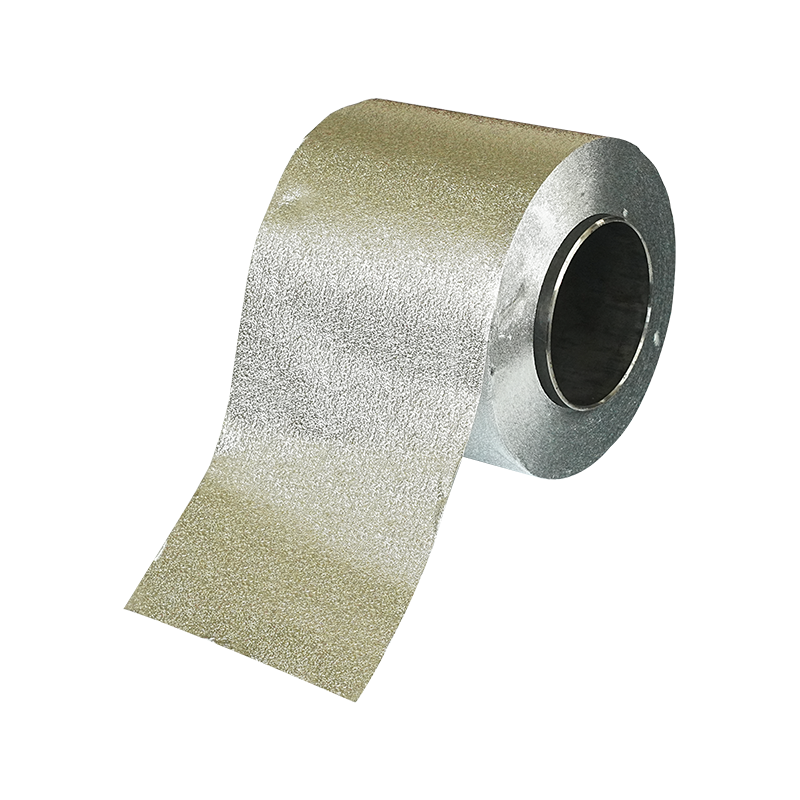
Continuous rolls go through an additional perforation or embossing stage during slitting. Perforated continuous shisha aluminium foil rolls represent this type of product.
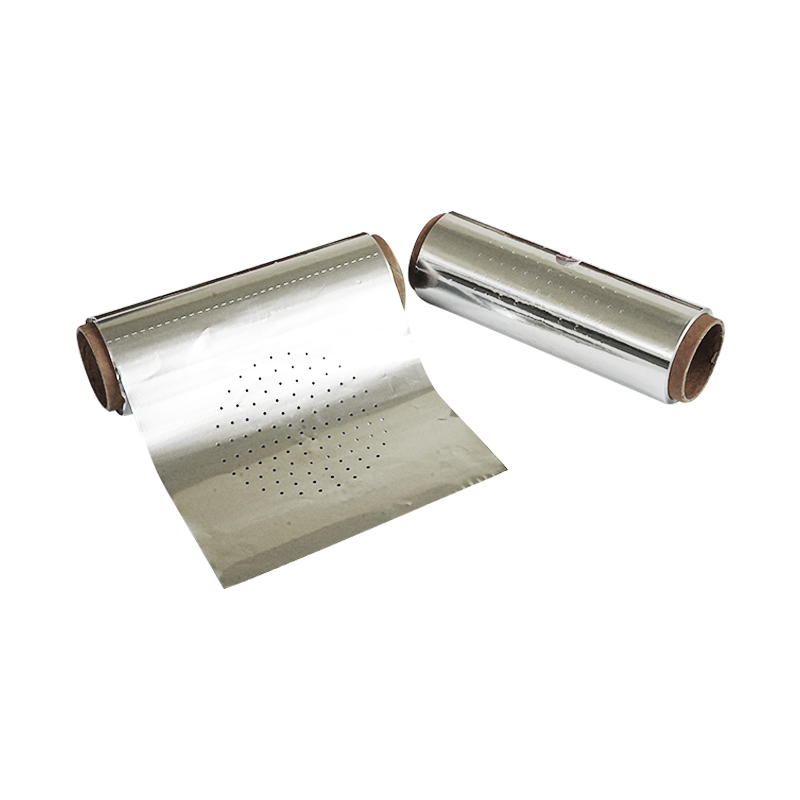
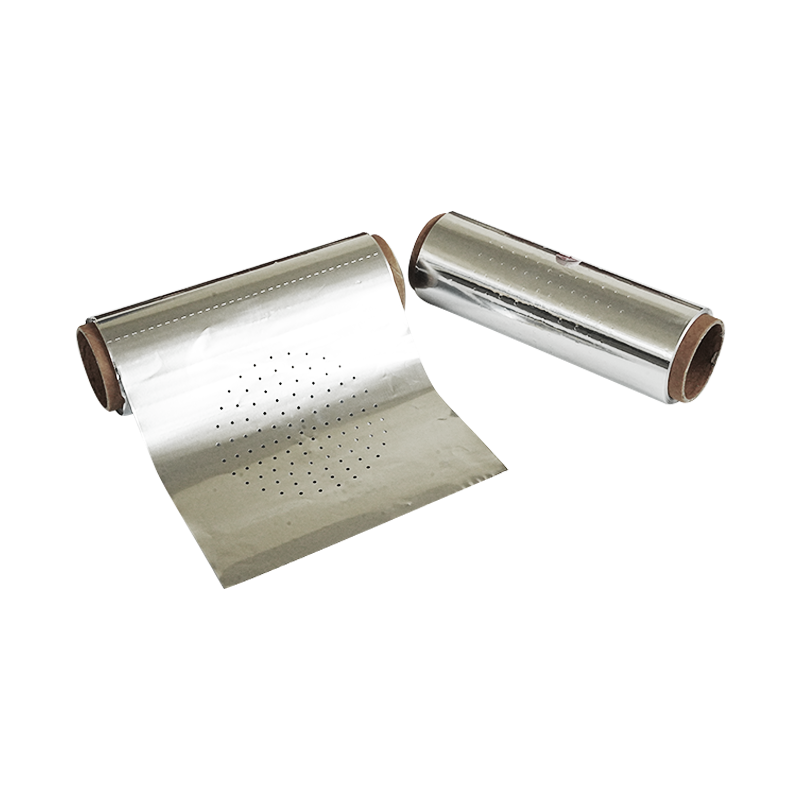 Continuous Perforated Shisha Aluminum Foil RollsThese rolls come in continuous form, allowing you to cut desired lengths for various bowl sizes. They offer heat resistance and even heat distribution, ideal for both home and professional hookah use.View Product →
What Separates Household Foil from Industrial Foil?
Household food foil and industrial or hookah foil differ mainly in thickness, alloy composition and surface treatment, not in the basic production principle.
Household foil typically runs 16-30 microns. It folds easily and needs lower tensile strength. Food-grade grades such as 1050 and 8011 can touch food directly and must comply with food contact material standards, especially heavy metal migration limits.
Industrial or hookah foil leans towards 40-80 microns, uses higher-alloy 8011, offers greater strength, and demands stable heat transfer after embossing or printing. Many projects are designed as continuous rolls or precut discs to reduce consumer handling time.
The gauge difference also changes packing density: a 1000-metre roll of 16-micron foil weighs noticeably less than the same roll at 40 microns, which is why kitchen foil is sold by length and hookah rolls by weight in many export markets.
What determines mechanical performance is not the number of rolling passes, but the combination of alloy system and final temper. Embossing and printing layers decide the final visual and tactile experience for the end user.
Household foil uses a simpler slitting and winding route. Multipurpose food-grade kitchen foil is a typical example, used for covering food, wrapping ingredients or baking liner duty.
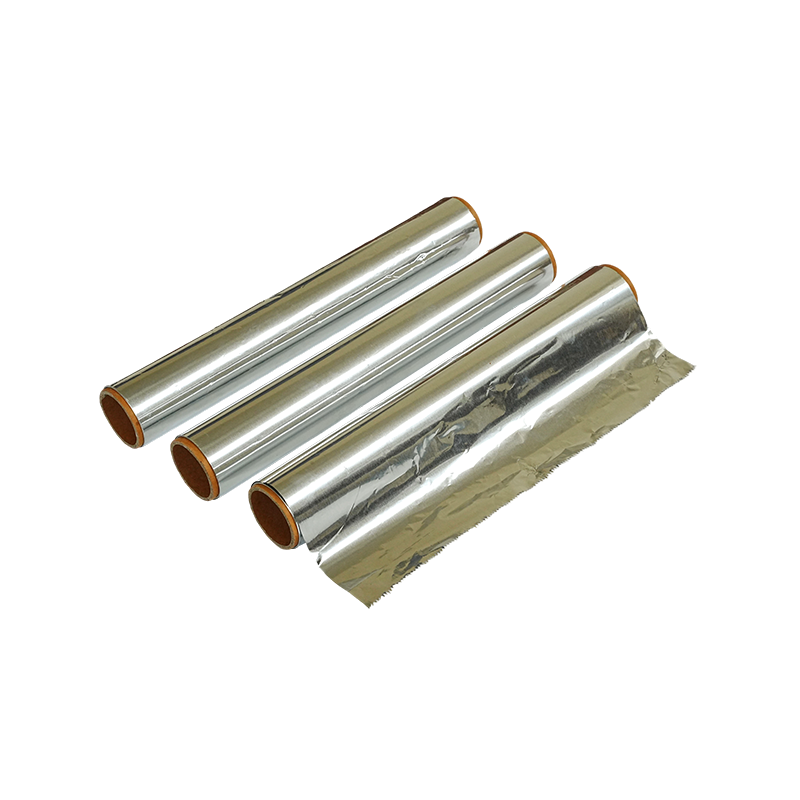 Multi-Purpose Food Grade Kitchen Foil RollsThis food-grade foil is versatile for wrapping, storing, cooking, and baking. Its high strength and barrier properties keep food fresh, and it withstands oven and grill temperatures, making it a kitchen essential.View Product →
How Foil Quality Is Measured on a Real Production Line
The key indicators on a real production line are pinhole count, thickness tolerance, surface roughness and tensile strength, each guided by industry standards.
| Parameter | Common standard range | Impact on use |
|---|---|---|
| Thickness tolerance | 5% to 10% tolerance | Roll weight and consistency |
| Pinhole count | No more than 30 per square metre | Moisture and leak resistance |
| Surface roughness Ra | 0.3-1.5 micrometres | Ink adhesion and feel |
| Tensile strength | 60-180 MPa | Tear resistance |
| Elongation | 1% to 3% minimum | No cracking when folded |
Quality control is not just a final laboratory test. During rolling, a thickness gauge records data every few milliseconds and feeds it back to the mill control system. Broken strips, surface defects and edge burrs are removed during slitting.
Standards: International standards such as ASTM B479 and EN 546 define thickness tolerances, pinhole limits and surface condition for household and food-contact foil. Export-focused factories normally follow these standards to meet regulatory requirements across markets.
Why Xianju's Foil Production Is Built for Export Buyers
The real goal of foil manufacturing is not to produce a roll, but to deliver stable, customisable batches that satisfy bulk purchasing requirements. That is the core capability of a professional foil processor.
Haining Xianju Industry and Trade Co., Ltd. was founded in 2006. It operates a 5,300 square metre production base, ships more than 30 containers per month, and exports to more than 50 countries across the Middle East, Europe, North America and Southeast Asia. For a buyer, the question is not whether the factory can make foil, but whether it can consistently deliver the required alloy, gauge, embossing pattern and printing colour.
Within its own system, Xianju runs embossing, colour printing and water-based ink lines, supports custom branding, and develops products from customer drawings, samples or original ideas. Buyers therefore do not need to source from multiple suppliers. Raw material formulation and finished packaging can be completed in one factory system.
5,300 sqm production base | 30+ containers monthly capacity | Exports to 50+ countries
FAQ: Aluminium Foil Manufacturing
These questions summarise what procurement teams most often ask when evaluating an aluminium foil supplier.
How thin can aluminium foil be made?
Standard foil can reach 0.006mm (6 microns), while mainstream household products range from 16 to 80 microns. Pack rolling technology and precision thickness gauging are the key to ultra-thin gauge.
What is the difference between hard and soft aluminium foil?
Hard temper foil is annealed at lower temperature or not annealed at all, giving high strength but poor folding ability. Soft temper foil is fully annealed, offering higher elongation and easier folding without cracking.
Can aluminium foil be recycled after use?
Yes. Aluminium can be recycled endlessly, and remelting requires only 5% to 8% of the energy used for primary production. Many buyers now request recycled aluminium in the supply chain.
How long does it take to produce an aluminium foil order?
Standard roll orders typically require 30 to 45 days from scheduling to delivery, depending on alloy system, thickness, embossing or printing process and order quantity.


READY TO CUSTOMIZE YOUR FOIL? CONTACT US TODAY!
+86-13484112116
+86-13967339826
No. 22, Zhijiang Road, Zhouwangmiao Town, Haining City, Jiaxing City, Zhejiang Province, China
Contact Us
