 English
 عربى
عربى

What Makes Aluminum Foil Safe or Risky in the Kitchen: A Science-Based Breakdown
Content
- 1 Understanding What Aluminum Foil Is Actually Made Of
- 2 How Aluminum Actually Migrates Into Food During Cooking
- 3 Is Aluminum Foil Toxic? What the Broader Exposure Picture Shows
- 4 Separating Evidence-Based Concerns From Persistent Myths
- 5 Food Grade Versus Heavy Duty Foil: Matching the Product to the Task
- 6 A Practical Workflow for Safer Foil Use in the Kitchen
- 7 Precautions for High-Acid and High-Heat Cooking
- 8 Choosing and Storing Multi-Purpose Foil for Daily Use
- 9 Frequently Asked Questions
- 9.0.1 Q1: Is it safe to cook with aluminum foil every day?
- 9.0.2 Q2: Does the shiny side or dull side of foil matter for safety?
- 9.0.3 Q3: Should people with kidney conditions avoid aluminum foil entirely?
- 9.0.4 Q4: Can heavy duty foil be reused safely?
- 9.0.5 Q5: Does freezing food in foil pose any additional risk?
Understanding What Aluminum Foil Is Actually Made Of
Aluminum foil is produced by rolling refined aluminum ingots into extremely thin sheets, typically between 0.006mm and 0.2mm depending on the intended application. Kitchen-grade rolls are almost always made from a controlled aluminum alloy that has been processed to remove impurities that could otherwise migrate into food during heating or storage. The purity level and rolling process directly influence how the foil behaves under heat, moisture, and acidic contact.
Not all foil is manufactured to the same standard. food grade aluminum foil is produced under stricter compositional controls than foil intended for industrial packaging or insulation, which is why the source and intended use of a roll matters more than most buyers realize when safety is the priority.
Key Structural Differences Between Foil Types
- Thickness determines puncture resistance and how much surface contact occurs with food
- Alloy purity affects how readily surface oxidation and micro-particle transfer can occur
- Surface finish (shiny side versus matte side) results from the rolling process, not a coating difference
- Roll width and gauge are matched to either household, catering, or heavy industrial use cases
How Aluminum Actually Migrates Into Food During Cooking
The central safety question is not whether aluminum foil contains aluminum, since that is obvious by definition, but whether trace amounts transfer into food in quantities that matter. Migration studies consistently point to three variables that control how much aluminum moves from foil into food: temperature, acidity, and contact duration.
When food is wrapped and heated to high temperatures for extended periods, the oxide layer on the foil surface can be disrupted, allowing a small amount of aluminum to dissolve into moisture on the food surface. This effect is measurable but small under normal home cooking conditions, and becomes more significant only when acidic ingredients are involved.
The pattern shown above is directional rather than absolute, since actual migration values differ by study design and food matrix. What matters practically is that the relationship is not linear at the low end; migration remains modest until temperatures move well past typical baking ranges, then increases more sharply with prolonged high-heat exposure.
Is Aluminum Foil Toxic? What the Broader Exposure Picture Shows
Framing foil in isolation misrepresents the real question. Aluminum is one of the most abundant elements in the earth's crust, and humans are exposed to it constantly through food, water, air, and consumer products, independent of whether foil is ever used. Regulatory food safety bodies evaluate total dietary aluminum exposure against a tolerable weekly intake benchmark, and foil contact is only one contributor among several.
Foil-related contact typically ranks as a moderate, secondary contributor rather than the dominant source. This does not mean foil use is irrelevant, but it does mean that eliminating foil entirely while ignoring processed food additives or unfiltered water would not meaningfully change total exposure for most households.
Separating Evidence-Based Concerns From Persistent Myths
Aluminum has been the subject of long-running public concern, particularly regarding neurological health. It is worth walking through the claims that circulate most often and what current evidence actually supports, without overstating certainty in either direction.
| Common Claim | Current Evidence Status | Practical Takeaway |
|---|---|---|
| Aluminum foil causes Alzheimer's disease | Not established as causal by major health bodies | No basis for avoiding foil on this ground alone |
| All foil-cooked food is unsafe | Contradicted; risk depends on temperature and acidity | Moderate use in normal cooking is considered low risk |
| Acidic foods leach more aluminum | Supported by migration studies | Limit direct prolonged contact with tomato, citrus, vinegar dishes |
| Kidney-impaired individuals need more caution | Supported; reduced clearance raises relevance of total intake | Discuss cumulative aluminum sources with a physician if relevant |
The available evidence does not support a categorical verdict that foil is either universally dangerous or entirely without consideration. Context, quantity, and cooking method are what actually determine risk.
Food Grade Versus Heavy Duty Foil: Matching the Product to the Task
Grade selection is one of the most overlooked safety variables. Thin, general-purpose rolls are not engineered for the same tolerances as thicker, reinforced sheets, and using the wrong grade for a demanding task can increase both tearing risk and the surface area exposed to heat and food acids.
Multi-Purpose Aluminum Foil is designed for everyday wrapping, covering, and light baking, while Heavy Duty Aluminum Foil is built for grilling, roasting, and situations where the foil must hold shape and resist puncture under sustained heat.
Heavy duty variants generally trade some flexibility and cost efficiency for higher heat tolerance and rigidity, making them preferable for grilling packets, roasting pans, and outdoor cooking where structural integrity under direct flame contact matters more than economy.
A Practical Workflow for Safer Foil Use in the Kitchen
Most of the risk associated with foil cooking comes down to a handful of avoidable habits rather than the material itself. The sequence below reflects the order in which decisions should actually be made before, during, and after cooking.
Each step is simple in isolation, but the cumulative effect of following all four consistently is what actually reduces unnecessary aluminum exposure over time, rather than any single precaution on its own.
Precautions for High-Acid and High-Heat Cooking
Certain cooking scenarios warrant more deliberate handling. Long, slow-roasted dishes involving tomato-based sauces, citrus marinades, or vinegar reductions are the cases most frequently flagged in migration research, since prolonged acidic exposure at elevated temperature is the combination most likely to increase transfer.
- Use a layer of parchment paper between acidic food and foil when extended contact is unavoidable
- Reserve foil-wrapped grilling for shorter cook times rather than multi-hour slow roasts
- Avoid storing leftover acidic dishes in foil for more than a few hours in the refrigerator
- Choose thicker, reinforced foil for high-heat grilling to reduce the likelihood of tearing and direct flame contact
When Foil Is a Reasonable Choice
For baking, steaming, tenting meat during resting periods, and short-duration roasting of low-acid vegetables and proteins, foil remains a practical and low-risk option. The concern scales with duration and acidity, not with the mere presence of foil in the cooking process.
Choosing and Storing Multi-Purpose Foil for Daily Use
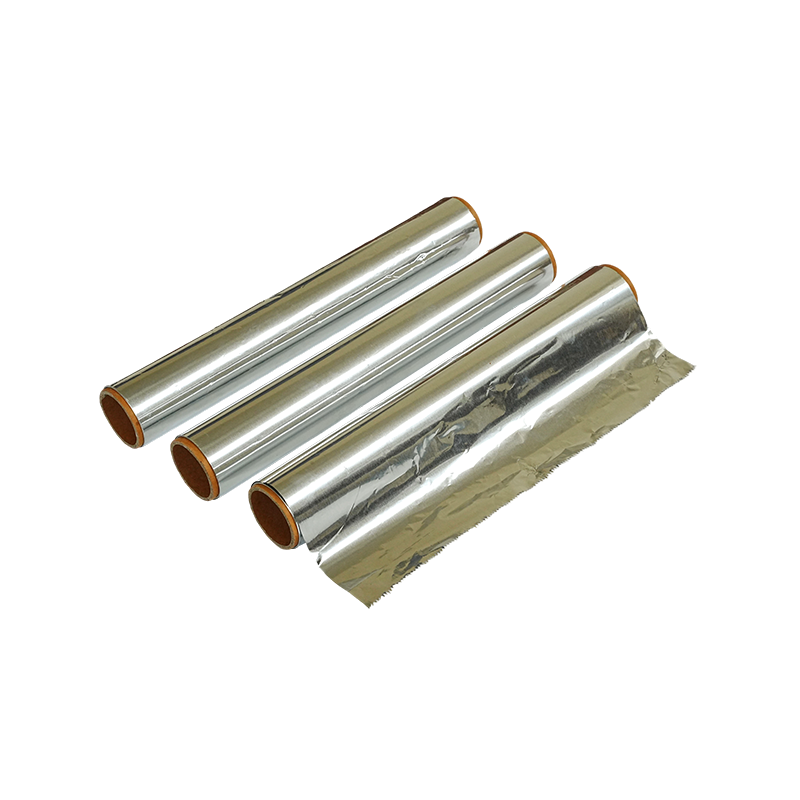
For everyday kitchen tasks such as covering dishes, wrapping sandwiches, or lining baking trays, a well-manufactured general-purpose roll is sufficient and does not need to match the specification of heavy-duty grilling foil. What matters most for daily use is consistent thickness, a clean surface finish free of residue, and storage away from humidity, which can accelerate surface oxidation over time.
- Store rolls in a dry cabinet away from direct sunlight and moisture
- Keep the box closed between uses to limit dust and surface contamination
- Discard any roll that develops visible pitting, discoloration, or a powdery surface residue
- Match roll width to the task to minimize unnecessary overlap and waste
Frequently Asked Questions
Q1: Is it safe to cook with aluminum foil every day?
Occasional and moderate daily use in typical baking, roasting, and covering tasks is generally considered low risk by food safety authorities, provided high-acid ingredients are not left in prolonged direct contact at high temperatures.
Q2: Does the shiny side or dull side of foil matter for safety?
The difference between the two sides comes from the rolling process and has no meaningful impact on migration or food safety; either side can be placed facing the food.
Q3: Should people with kidney conditions avoid aluminum foil entirely?
Since impaired kidney function can reduce the body's ability to clear absorbed aluminum, individuals with such conditions may benefit from discussing total dietary aluminum sources, including foil use, with a healthcare provider rather than avoiding foil outright without guidance.
Q4: Can heavy duty foil be reused safely?
Reuse is acceptable if the foil remains intact, clean, and free of punctures or residue from previous acidic or greasy foods, though thinner multi-purpose foil typically does not hold up as well to repeated use as heavier gauge sheets.
Q5: Does freezing food in foil pose any additional risk?
Freezing does not involve heat-driven migration, so foil used for freezing and short-term cold storage is generally considered safe, provided the food is transferred to a different wrap before any acidic reheating step.
READY TO CUSTOMIZE YOUR FOIL? CONTACT US TODAY!
+86-13484112116
+86-13967339826
No. 22, Zhijiang Road, Zhouwangmiao Town, Haining City, Jiaxing City, Zhejiang Province, China
Contact Us
