 English
 عربى
عربى

What Makes Embossed Foil Grip Better Than Smooth Foil During Hair Bleaching
Content
- 1 Texture Is Not a Cosmetic Detail on Salon Foil
- 2 How the Embossed Pattern Changes Surface Friction
- 3 Where Smooth Foil Still Performs Well
- 4 Visualizing Grip Behavior at the Fold
- 5 Thickness and Gauge Still Matter Alongside Texture
- 6 Grip and Salon Workflow Speed
- 7 Matching Foil Choice to Technique
- 8 Frequently Asked Questions
- 8.0.1 Q1: Does embossed foil affect how evenly heat reaches the hair during processing
- 8.0.2 Q2: Is embossed foil harder to fold neatly than smooth foil
- 8.0.3 Q3: Can embossed and smooth foil be mixed in the same service
- 8.0.4 Q4: Does foil texture change how long bleach can safely process
- 8.0.5 Q5: Is thicker foil always the better grip choice regardless of texture
Texture Is Not a Cosmetic Detail on Salon Foil
Every stylist who has folded a packet at the crown while a client tilts forward knows the frustration of a slick sheet sliding out of position. The surface pattern pressed into hairdressing foil rolls is not decoration. It is a mechanical feature that changes how the sheet behaves the moment it meets wet hair, bleach powder, and gloved fingers under time pressure.
Grip in this context has three practical meanings: the foil stays where it is placed on the section, it does not slip while being folded, and it holds its shape once creased so the packet does not loosen during processing. Smooth foil and embossed foil handle these three demands differently, and the difference shows up most clearly on fine hair, short sections, and fast full-head applications.
How the Embossed Pattern Changes Surface Friction
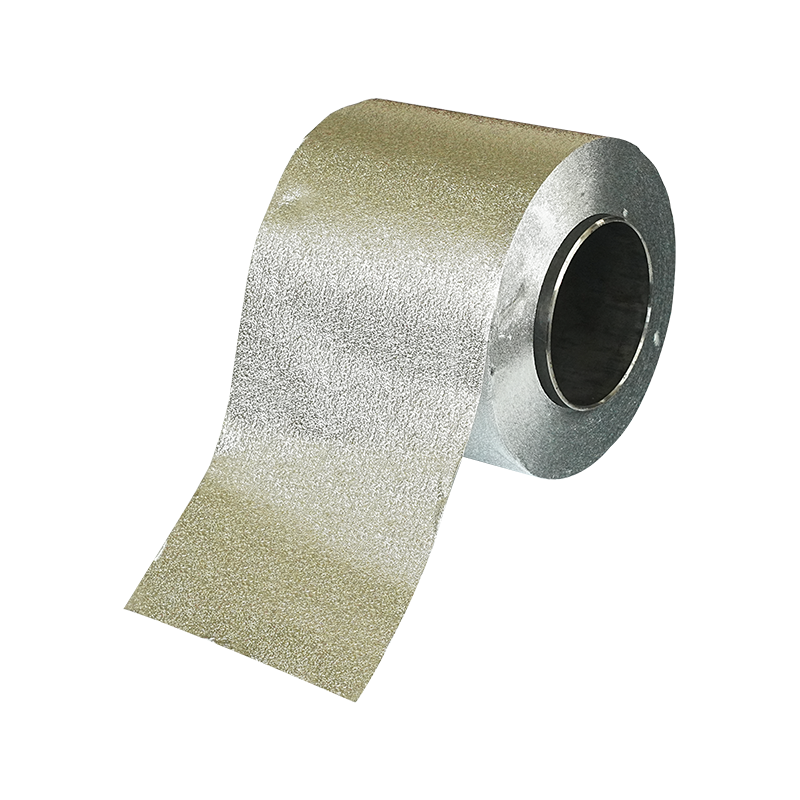
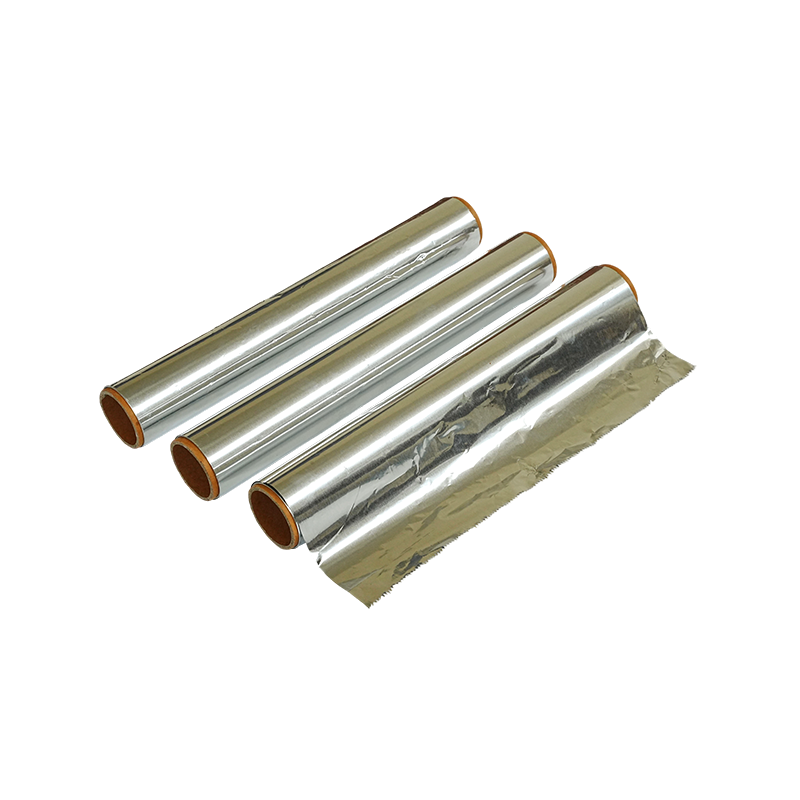
An embossed hair salon foil roll is run through rollers that stamp a raised diamond, wave, or dot pattern into the aluminum during manufacturing. This raises the surface area of the sheet and creates thousands of small ridges that interrupt a smooth, continuous contact plane.
Three effects of embossing on handling
- Higher static friction against wet or bleach-coated hair, which reduces slippage during sectioning
- A slightly thicker feel per gauge, since the pattern adds structural rigidity without adding much raw material
- Better resistance to tearing at fold lines, because the ridges distribute stress rather than concentrating it along one flat crease
The ridges also trap a very thin layer of air and moisture between the foil and the hair strand. On a smooth sheet, that same moisture acts as a lubricant, and lubrication is exactly what causes a section to slide. The textured surface breaks up that film, which is why many stylists describe embossed foil as feeling more secure the moment it touches a wet section.
Where Smooth Foil Still Performs Well
Smooth hairdressing aluminum foil roll stock is not obsolete. It has three practical advantages that keep it in regular rotation for certain services.
| Factor | Smooth Foil | Embossed Foil |
|---|---|---|
| Fold precision on tight sections | Higher, edges crease cleanly | Slightly less precise on very small folds |
| Grip on wet or bleach-loaded hair | Lower | Higher |
| Heat transfer speed | Marginally faster due to flat contact | Marginally slower, more even |
| Cost per roll at equal thickness | Usually lower | Usually slightly higher |
| Stacking and storage | Sheets sit flatter | Sheets take up slightly more volume |
Smooth foil tends to be preferred for pre-cut sheet work on short, structured haircuts where the sections are already small and controlled, and the risk of slippage is lower because there is less hair mass to hold in the packet.
Visualizing Grip Behavior at the Fold
The diagram below illustrates why the raised pattern on salon hair coloring foil resists slipping compared with a flat sheet under the same fold pressure.
Thickness and Gauge Still Matter Alongside Texture
Grip performance is not decided by texture alone. The gauge, or thickness, of the sheet interacts with the embossed pattern to determine how much pressure a stylist can apply before the foil loses its shape.
Typical gauge ranges used in salons
- Light gauge, around 0.011 to 0.012 mm, common for pre-cut sheets on quick color refreshes
- Standard gauge, around 0.013 to 0.015 mm, the most common choice for full-head balayage and highlight work
- Heavy gauge, around 0.016 mm and above, used for double-processing or long-duration lightening services
A light-gauge smooth sheet will slip more readily than a standard-gauge embossed sheet holding the same section, simply because there is less material stiffness to resist the pull of gravity once the hair is folded inside. When grip is the priority, pairing embossed texture with at least a standard gauge gives the most consistent result across a full head of foils.
Grip and Salon Workflow Speed
Grip is not only about avoiding a mess. It directly affects how fast a stylist can move through a service, because a sheet that has to be repositioned costs time that adds up across dozens of foils in a single appointment.
- On a full head of eighty to one hundred foils, saving even three seconds per fold by avoiding slippage can shorten total application time by several minutes
- Assistants who are still building muscle memory for folding tend to benefit more from embossed texture, since the sheet forgives slightly imperfect angles
- Fast balayage techniques that rely on freehand painting followed by a loose foil wrap depend heavily on grip, since the section is not pre-clamped before the foil closes
Stylists working with heavier, coarser hair often notice the difference most, because coarse strands carry more weight per section and place more downward pressure on the fold.
Matching Foil Choice to Technique
Rather than treating embossed and smooth as a strict upgrade and downgrade, it helps to match the texture to the technique being performed.
When embossed texture is the stronger choice
- Balayage and freehand painting where sections are loose before folding
- Long hair with heavy sections that add weight to the packet
- Fast-paced full-head color where speed and consistency matter more than a perfectly flat fold
When smooth texture is still reasonable
- Pre-cut small sheets for short haircuts with tightly controlled sections
- Detail work such as face-framing pieces where a precise, flat crease is more important than grip
- Budget-driven bulk purchasing where cost per roll outweighs marginal handling differences
Many salons keep both types in stock, using hair coloring aluminum foil with embossed texture for the bulk of the service and a smaller roll of smooth sheets for detail sections.
Frequently Asked Questions
Q1: Does embossed foil affect how evenly heat reaches the hair during processing
The difference is minor. Both surfaces conduct heat efficiently because aluminum itself is the primary factor, not the surface pattern. Embossed foil spreads contact slightly more evenly across the ridge points, while smooth foil transfers heat marginally faster at a single flat plane, but neither difference is large enough to change processing time in practice.
Q2: Is embossed foil harder to fold neatly than smooth foil
On larger sections it folds just as cleanly. On very small or detail sections, some stylists find smooth foil easier to crease into a tight, flat edge, which is why smooth sheets remain popular for precise face-framing work.
Q3: Can embossed and smooth foil be mixed in the same service
Yes. It is common practice to use embossed foil for the main body of a full-head application and switch to smooth sheets for small, detail-focused sections where a flatter crease is preferred.
Q4: Does foil texture change how long bleach can safely process
No. Processing time is governed by the lightener formulation and heat exposure, not by whether the foil surface is smooth or embossed. Texture affects handling and grip, not chemical activity.
Q5: Is thicker foil always the better grip choice regardless of texture
Thickness helps the foil hold its folded shape under pressure, but texture is what prevents the section from sliding before the fold is even closed. The two properties work together rather than one replacing the other.
READY TO CUSTOMIZE YOUR FOIL? CONTACT US TODAY!
+86-13484112116
+86-13967339826
No. 22, Zhijiang Road, Zhouwangmiao Town, Haining City, Jiaxing City, Zhejiang Province, China
Contact Us
